If you are looking at land in Kouts, it helps to think like a builder or investor before you think like a dreamer. A parcel can look perfect on paper, but road access, utilities, septic rules, and zoning often shape its real value. When you understand what builders and investors actually study, you can make smarter land decisions and avoid expensive surprises. Let’s dive in.
Why Kouts Land Draws Interest
Kouts is a small Porter County community with about 2,372 residents and 923 households. The local housing profile is heavily owner-occupied, with about 85% of homes occupied by owners, and about 88% of housing in single-unit structures. That makes Kouts a market where detached homes and rural-style residential use tend to fit more naturally than higher-density projects.
For many buyers, that means land in Kouts is often evaluated for custom homes, spec homes, small residential splits, or long-term holds. Investors may still look at future upside, but the current housing mix points more toward single-family and rural residential opportunities. In practical terms, the best parcel is not always the biggest one. It is the one that matches how the area actually develops.
Access Comes First
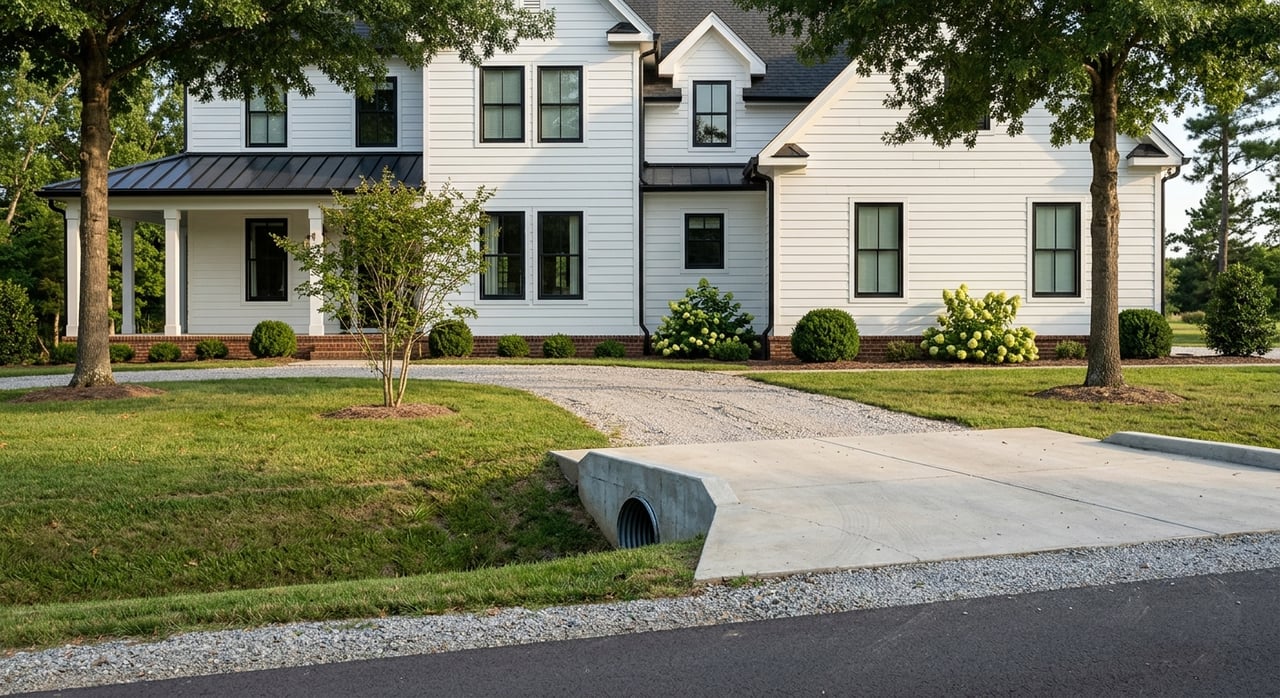
Before a builder gets excited about acreage, they usually ask a simple question: how do you legally and practically get in and out of the property? In Kouts, that starts with knowing whether the parcel fronts a town street, a county road, or a state or US highway. Different agencies may control maintenance, driveway approvals, and road work depending on the frontage.
Porter County notes that roads inside municipal boundaries are maintained by the town. State roads and US highways are handled by INDOT, while unincorporated roads fall under the county highway department. That matters because the approval path can change based on where the parcel sits.
Builders and investors also pay close attention to details listed in the county plan commission checklist, including:
- Existing roads and right-of-way
- Driveways within 300 feet
- Access points
- Sight triangles
- Easements
- Utility locations
These items may sound technical, but they affect whether a parcel is easy to develop, expensive to improve, or difficult to market later. If access is limited or unclear, the land may be less attractive even if the price looks right.
A Kouts Address Is Not Always Town Zoning
This is one of the most important things to understand. Not every property with a Kouts mailing address falls under Town of Kouts zoning. Some parcels are outside town limits and are reviewed under Porter County rules instead.
That can change the process in a big way. A parcel in Pleasant Township with a Kouts address, for example, may be reviewed as a county property under A1 General Agriculture District rather than under town zoning. For buyers, that means you should not assume the mailing address tells you who governs the land.
Utilities Can Change Everything
When builders compare land, utility access often matters more than raw acreage. A five-acre parcel without practical utility options may be less appealing than a smaller tract with cleaner development potential. In Kouts, water, sewer, and septic feasibility can directly affect lot design, cost, and timing.
The Town of Kouts code says subdivision water and sewer systems must meet standards from the EPA, IDEM, the State Board of Health, the Porter County Board of Health, and the Town of Kouts Water and Sewer Department. It also states that utilities are to be dedicated to the public within 24 months of the first dwelling’s certificate of occupancy.
Outside of public utility access, septic becomes a major part of land analysis. Porter County’s Health Department says all well installations require permits, including irrigation and gardening wells, and that new construction on a grandfathered lot still needs residential, well, and septic permits.
Septic Rules Shape Buildability
For land without sewer access, septic approval can be one of the biggest hurdles. Porter County states that at least one acre of usable or buildable acreage is required for a septic permit. That usable area does not include easements, ponds, wetlands, hydric soils, or disturbed areas.
This is why a builder does not just look at the total number of acres on a listing. They want to know how much of that land is actually usable. A parcel may look large, but if the buildable area is reduced by site conditions, septic feasibility may become the deciding factor.
The county plan commission checklist supports this approach by requiring review items such as:
- Topography
- Soil borings for septic lots
- Wetlands
- Floodplain
- Drainage
- Utilities
- Easements
In other words, land value often comes down to what can be built safely and legally, not just what the survey says.
Lot Size Minimums Matter in Kouts
Inside Kouts, zoning standards tie lot size to utility availability. Where a section has neither sewer nor public water, the minimum lot size is one acre with 150 feet of width at the building line. Where sewer is absent but public water exists, the minimum is 43,000 square feet and 100 feet wide.
Smaller lots may be allowed by variance if safe and effective sewage disposal can be shown. For investors, this matters because lot yield is one of the first things used to estimate value. If a parcel cannot support the number of lots you expected, the financial picture changes quickly.
Public Sewer vs. Septic Economics
Porter County’s utility standards generally favor public sewer where it is available. On-site waste treatment is considered only if the zoning district allows septic and if the cost to extend sewer would be at least twice the cost of septic, with an exemption for five lots or fewer.
The county also states that public water extension is at the developer’s expense. That means a parcel with nearby utility lines is not automatically cheap to develop. Builders want to know not only whether utilities exist, but also what it may cost to connect or extend them.
For that reason, experienced land buyers usually compare parcels based on:
- Distance to utility service
- Septic feasibility
- Water extension cost
- Road frontage and driveway approvals
- Site constraints like wetlands or floodplain
Zoning Tells You the Likely Fit
Inside town limits, the official Kouts zoning map at Town Hall is the final authority. The codified zoning chapter includes districts such as Open Space, R-1, R-2, R-3, Light Industrial, and General Industrial. Because codified online materials may not reflect the most current legislation, final zoning answers should be verified with Town Hall before you buy or file for a variance.
Outside town limits, Porter County zoning includes districts such as A1 General Agriculture, RR Rural Residential, and R1 Low Density Single-family Residential. The county describes R1 as intended for single-family detached homes, medium to large homes, and large lots. A1 is intended for agricultural operations but still permits single-family detached homes.
That distinction is important because a parcel can be buildable and still be rural in character. Builders and investors want the zoning to match the likely end product. In Kouts, that often means detached housing or long-term rural land strategies are the clearest fit.
Overlays Can Affect Timing
Another smart step is checking overlay layers early. Porter County’s unified development map includes overlays such as airport, blueways, scenic routes, thoroughfare, and wellhead protection. These layers can affect access, drainage, or approval timing.
A parcel might still work, but an overlay can add review steps or design considerations. This is one reason land due diligence should start early, before you make assumptions about build time or total project cost.
What Builders Usually Want in Kouts
Most builders are looking for land that solves problems, not land that creates them. In Kouts, that usually means a parcel with clear frontage, workable access, realistic utility or septic options, and zoning that supports detached residential use.
Based on the local housing mix and development standards, the strongest fit is often one of these:
- Detached home sites
- Small residential subdivisions where access works
- Septic-feasible rural lots
- Long-term rural holds that may benefit from future utility extension or rezoning
That does not mean every parcel fits one of these paths. It means these are the use cases that tend to align best with what the market and local rules support today.
How to Read a Kouts Parcel Smarter
If you are buying, selling, or evaluating land in Kouts, try to look at it through four lenses at once. First, ask who controls the road and access. Second, confirm whether the parcel is under town or county jurisdiction. Third, study utility and septic feasibility. Fourth, check zoning and overlays before you price the opportunity.
This is where local guidance matters. Land can be full of potential, but potential only becomes value when the site conditions and approval path make sense. A parcel that looks simple online may require much more investigation on the ground.
If you want help evaluating land in Kouts or anywhere across Northwest Indiana, Anna Steuer can help you look at the property with a builder’s eye and a local market perspective.
FAQs
What makes land in Kouts attractive to builders?
- Builders often focus on Kouts parcels that support detached housing, have workable road access, and offer realistic utility or septic options.
How do septic rules affect Kouts land value?
- In Porter County, at least one acre of usable or buildable acreage is required for a septic permit, so site constraints can directly affect whether land is truly buildable.
Does a Kouts mailing address mean the property is under Town of Kouts zoning?
- No. Some properties with a Kouts address are outside town limits and may instead fall under Porter County zoning and review.
Why do utilities matter so much for Kouts land?
- Utility availability can strongly affect development cost, lot layout, and approval strategy, especially when sewer or water extensions are needed.
What zoning districts are common around Kouts land?
- Inside town, Kouts includes districts such as R-1, R-2, R-3, Light Industrial, and General Industrial, while county areas may include A1, RR, and R1 districts.
What should you verify before buying land in Kouts?
- You should confirm road frontage and access, jurisdiction, utility or septic feasibility, zoning, and any overlay constraints before moving forward.